Description
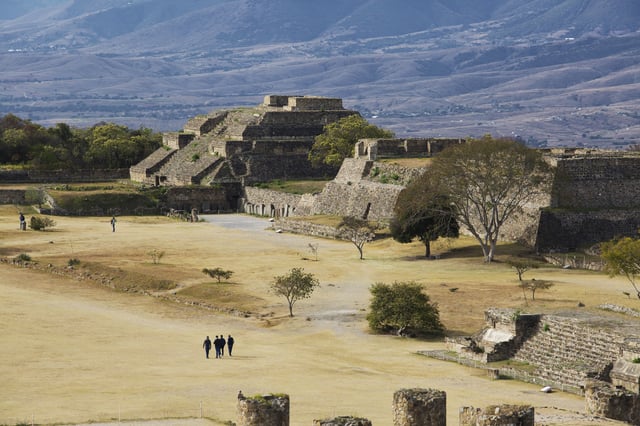
The incomparable city of the Olmec, Zapotec and Mixtec peoples, inhabited over a period of 1500 years. Monte Albán occupied a mountain top, and is where the treasure of Tomb 7 was found. The site museum presents its evolution and the extent of its rich culture. A UNESCO World Heritage Site.
Historical overview
One of the achievements of the Monte Albán Special Archeology Project, the museum opened its doors in November 1994. It has a built area of 11,700 square feet and is divided into permanent exhibit areas and a temporary exhibit gallery. The collection consists of 650 archeological pieces, which include stone carvings, pottery, ceramic figurines, shells and bone remains. It also displays the treasure from Tomb 7 found by Alfonso Caso in 1932. Along with the city of Oaxaca, this pre-Hispanic settlement was designated a UNESCO World Heritage Site on December 11, 1987.
Visitors can learn about topics ranging from the history of the site’s discovery and exploration (through accounts from the many travelers who have visited it since the nineteenth century), how the pre-Hispanic city was founded on a mountain top, the architecture, ceramics, funeral rites, religion, writing system, influence and trade of this major city, as well as its eventual collapse.