Description
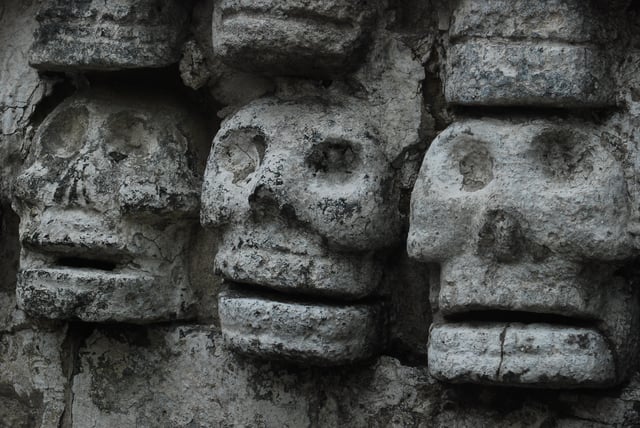
The Great Teocalli (temple) that amazed the Conquistadors remains a testament to the magnificence of the Tlatoani chiefs and the religiosity of their people; it was also the cosmic center of Mexica rule. A unique museum showing the remains of the original construction and its valuable monuments.
Historical overview
This is one of the most important museums in Mexico’s capital city. Inaugurated on October 12, 1987 it provides a home for the artefacts uncovered during the first season of archeological excavations carried out at the Templo Mayor site between 1978 and 1982. This work brought to light a collection of more than 7,000 objects, as well as the remains of Tenochtitlan’s Templo Mayor—literally Great Temple—and some adjacent buildings. The original exhibition design was based on the same layout as the Templo Mayor itself, a place of worship dedicated to two divine beings: Huitzilopochtli, the sun god of war and patron of the Mexica people, whose shrine can be found on the southern side of the building; and Tlaloc, god of rain, who had a direct connection to agriculture, and whose temple is located to the north of the complex. The first four galleries focus on Huitzilopochtli and war in general, while the final four are devoted to Tlaloc, agriculture, and the Mexica people’s use of natural resources. This explains why today’s museum has two entrances.
Visitors to the museum can learn about the history of the archeological work carried out at the site, where discoveries have been made ever since the late vice-regal period, and excavations are ongoing as part of the Urban Archeology Program. Exhibits focus on religious rituals and sacrifices, with examples of the tributes exacted by the Mexica from their subjugated peoples and details of their vast trading network; on objects related to the god Huitzilopochtli; on the worship of the god Tlaloc and how he was represented; on local flora and fauna in pre-Hispanic times; on the chinampas, man-made islands used by the Mexica to grow crops; and finally on the vice-regal period from its beginnings until the nineteenth century, and what has survived into the twentieth century.