Description
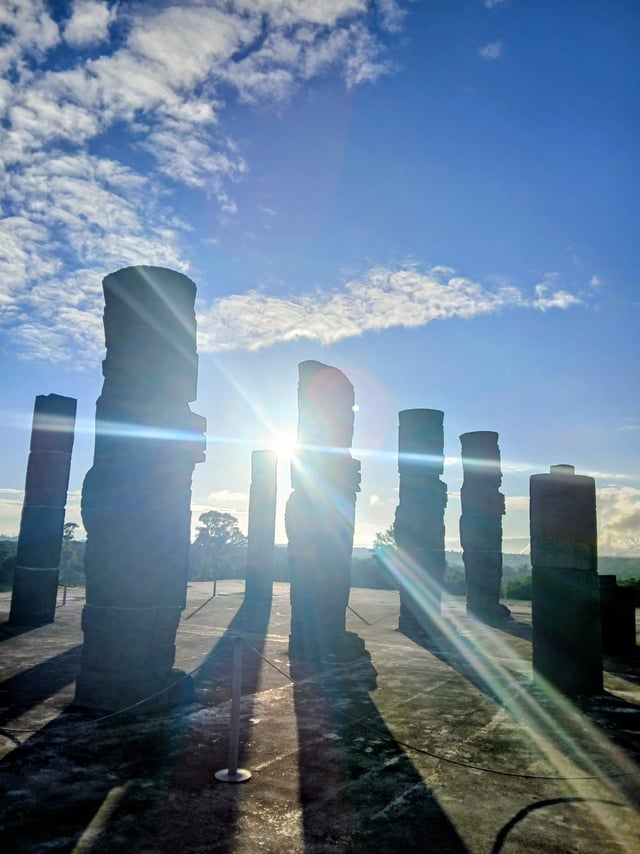
The archeologist Jorge A. Acosta (1904-1975), discovered the great Atlantes of Tula and other finds. The museum recreates the ancient Tollan Xicocotitlan: with sculpture, ceramics, stelae, offerings and gods (Quetzañcoatl, Tecatlipoca) and the vast population, inheritors of Teotihuacan.
Historical overview
Visitors can learn about the explorations—led by Mexican archeologist Jorge R. Acosta—carried out at this important site over a period of approximately 20 years. Opened in November 1982 in its new premises, the design of the single-story building provides a cultural and historical overview of the origin, development, and decline of the Toltecs and the remains of the city of Tollan Xicocotitlan (“place of the reeds near the place—or hill—of the wasps”), through five thematic sections in a U-shaped exhibition layout.
The first section offers a panorama of the city’s location, its extent, and main areas of influence, as well as the stone carving workshops. The second covers the principal ceramic collections discovered in the region, starting with a range of fine vessels from the phase known as the Coyotlatelco (perhaps meaning “where the land is impregnated with snakes”). The third area has displays of stone sculptures, with impressive artifacts including atlantes, pillars, Chac Mools, stelae, anthropomorphic and zoomorphic altar holders and flag holders, column plinths, headstones, crenels, bench moldings, offering cases and anthropomorphic and zoomorphic figures. The fourth area is focused on the gods and residential quarters that have been excavated. Finally, in the fifth section, we can appreciate various aspects related to the ceramic and stone carving workshops, with references also to the Aztec occupation discovered by Jorge R. Acosta when working on the Toltec ruins.