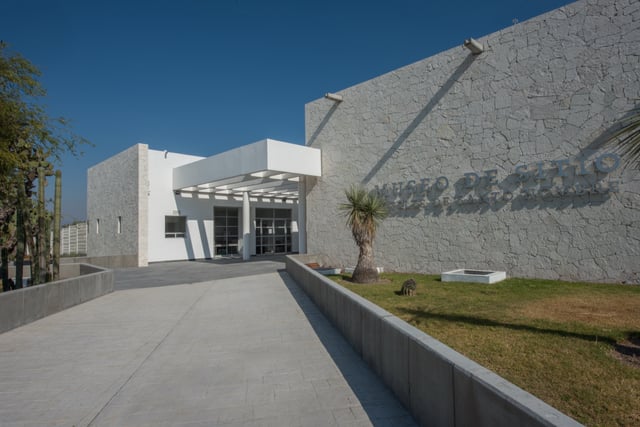
Description
The site is thought to have been a key settlement of the pre-Hispanic period in terms of its interactions with the central area, the Gulf and Oaxaca. The site is in the south of Puebla and has architectural features similar to Teotihuacan, as well as sharing cultural traits with Tehuacan and the Mixtec region.
Historical overview
The name Teteles in Nahuatl means “mound of stones.” It is located to the southeast of Tlacotepec de Benito Juárez, between the towns of Xochitlán Todos Santos and Santa María Alta in the state of Puebla.
Investigations have shown that the building of this complex began around 400 BC and that modifications and extensions continued to be made until approximately 650 AD, reaching the end of the Terminal Preclassic and continuing into the Early and Middle Classic. It is important to note that the spaces opened up by the excavations show that the buildings had been closed intentionally.
All the indications are that the many architectural complexes covering an area of more than 150 acres are plazas, platforms, temples and a few rooms used for domestic and ritual purposes, limited to members of the governing elite who were responsible for the buildings.
The majority of the population lived in houses made from perishable materials, principally mud and branches, in the area surrounding the monuments of the civic center, which was undoubtedly the seat of regional political power during this period.